
Common Mistakes That Make Games Harder Than They Need to Be
Avoid common habits involving resources, upgrades, tutorials and difficulty settings that can make games unnecessarily frustrating.
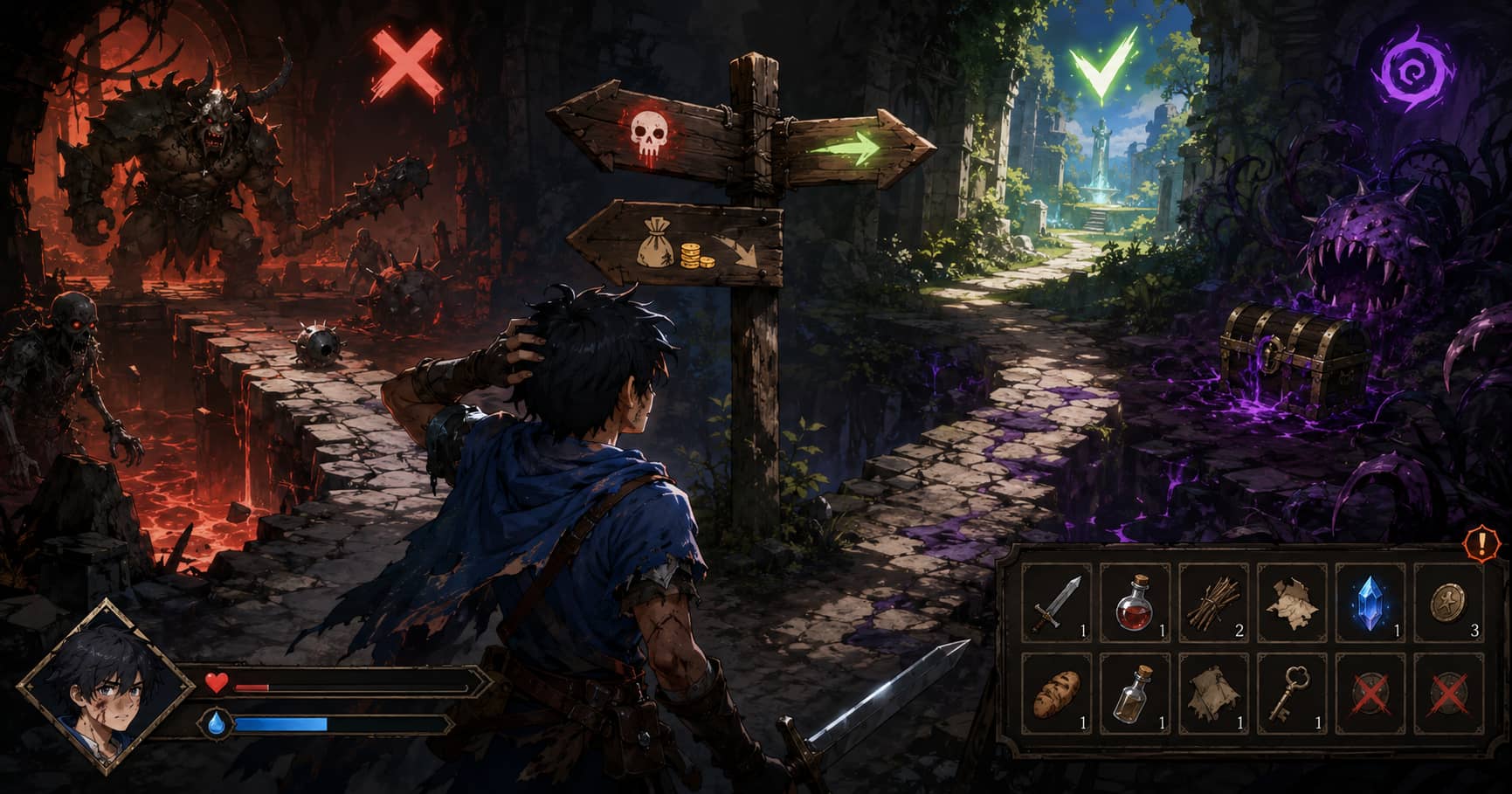
Games often feel difficult because the player is missing information, using resources inefficiently, or repeating a habit that the game quietly punishes. Better reflexes can help, but many frustrating sections become manageable after a change in preparation or decision-making.
The mistakes below apply across action games, role-playing games, strategy titles, survival games, and online competition. They are not rules that every game follows. Use them as questions when progress stops.
Skipping tutorials because the controls look familiar
Knowing how to move and attack does not mean you understand stamina, stagger, elemental interactions, cover rules, timing windows, or progression systems. Modern games often teach one mechanic at a time and expect it later. Skipping the explanation can make a normal encounter feel unfair.
Reopen the tutorial archive, controls screen, codex, or training area. Test the mechanic in a safe environment. A five-minute review is faster than failing for an hour while using only the most obvious action.
Hoarding every useful item for a future emergency
Consumables have no value if the campaign ends with the inventory full. Healing items, buffs, ammunition, traps, and crafting materials exist to convert resources into progress. Save rare items for meaningful situations, but define what meaningful means before the moment arrives.
A practical rule is to use a resource when it prevents a likely failure or saves more resources than it costs. If an item is common enough to replace, treat it as part of the normal toolkit.
Upgrading everything instead of building one reliable plan
Spreading limited currency across many weapons, characters, or skills can leave every option underpowered. Early in a game, choose one dependable damage source, one defensive tool, and one utility option. Learn how they interact before funding experimental alternatives.
This does not require copying an online “best build.” A top build may depend on late-game equipment or expert execution. A simple build that you understand is stronger than a theoretical maximum you cannot use consistently.
Ignoring defensive systems
Players often focus on damage because progress is visible, while blocking, dodging, positioning, resistance, cover, and crowd control feel slower. Many games balance enemies around active defence. More damage cannot help if you are interrupted before the attack lands.
Practice one defensive action at a time. Watch the enemy rather than your own animation. Learn which attacks can be blocked, interrupted, avoided, or prevented through positioning.
Using default settings that obscure information
A narrow field of view, tiny subtitles, excessive motion blur, low brightness, unsuitable audio range, or poor control sensitivity can make important cues harder to read. These are not always intentional challenges.
Review our guide to settings worth changing before a new game. Adjust only the setting connected to the problem and keep the original value recorded.
Following the objective marker without exploring systems
Rushing from marker to marker can leave a character under-equipped or prevent you from learning optional mechanics. Side activities often teach crafting, companions, movement, or combat in lower-pressure situations. Exploration may also provide resources that make the next main objective reasonable.
Do not clear a map mechanically. Explore when the activity offers a skill, tool, story, or resource you need. Ignore repetitive tasks that exist only to fill a checklist.
Repeating the same failed approach at full speed
Failure is useful only when it produces information. After two or three similar attempts, stop and name the cause. Did you run out of healing? Lose track of an enemy? Miss a damage window? Enter with the wrong equipment? Change one variable before trying again.
Our article on improving without playing all day explains how short feedback loops turn a failure into a focused practice target.
Playing while tired, angry, or rushed
Fatigue reduces attention and makes small setbacks feel personal. A player who keeps extending a session to “win back” lost progress often makes worse decisions. Competitive games amplify this because rank provides a visible reason to continue.
Set a stop condition before starting: a time, number of matches, or completion point. If you cannot explain what you are trying to improve, take a break rather than turning frustration into repetition.
Refusing to change difficulty
Difficulty modes alter different systems. Lowering one may reduce enemy health, widen timing windows, provide navigation help, or preserve resources after death. If the selected mode blocks learning or enjoyment, changing it is a tool, not a confession.
Likewise, increasing difficulty can improve engagement when the current mode allows careless play. Choose the level that creates useful decisions. The label on the menu does not know your experience, available time, or access needs.
Assuming every loss is a skill problem
Technical faults can imitate poor play. Unstable frame rates, input conflicts, stick drift, network loss, and unclear display settings affect timing. Test another game or device when a problem feels inconsistent. Do not spend hours retraining around a damaged controller.
At the same time, avoid blaming hardware for every defeat. Use evidence: repeatable missed inputs, measured performance drops, or connection warnings. Honest diagnosis protects both your time and budget.
Forgetting to save and back up
Lost progress makes a game harder in the least interesting way. Learn the autosave rules, rotate manual slots, and keep an independent backup for long campaigns or modded games. Cloud sync is useful, but it can also synchronize a damaged file.
The broad lesson is to reduce avoidable difficulty before chasing advanced techniques. Read the systems, use the tools, review repeated failures, and protect your attention. A game becomes more satisfying when the challenge comes from its intended decisions rather than preventable friction.
GameAtlas HQ
Read more practical gaming coverage across our six editorial categories.